MathTango: Math Games for Kids
Play PiknikEducational
4.544.00 Reviews
- Version
- 1.3
- Installs
- 100.00K
- Age Rating
- Everyone
Screenshots
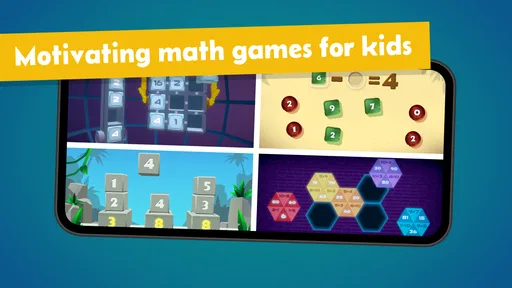
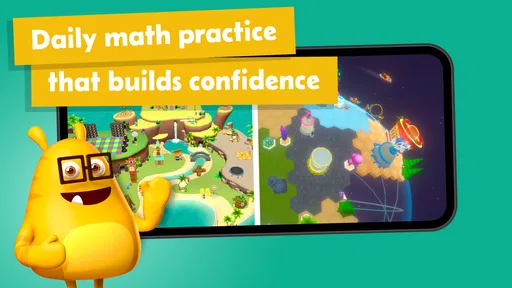
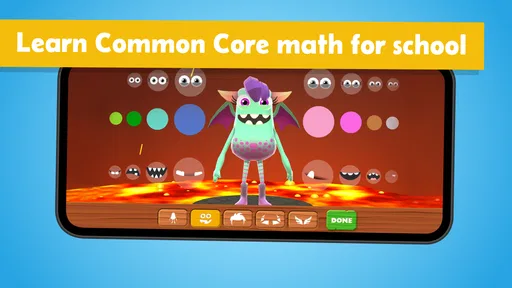
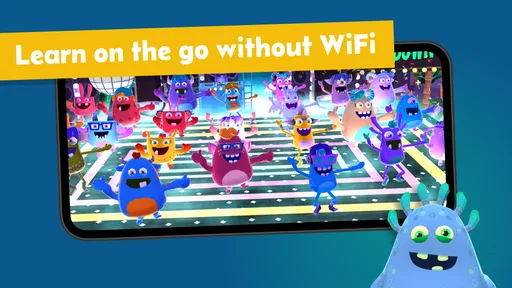
Our Review of MathTango: Math Games for Kids
 Analysis by Appyee
I look for kids’ math games that can hold a child’s attention without making practice feel like another worksheet. MathTango: Math Games for Kids takes a playful, story-led approach, and that makes it an appealing option for families who want a more inviting way to revisit arithmetic. It is an educational game from Play Piknik, aimed at learners from kindergarten through grade five. I would treat it as a useful practice companion, not a substitute for a teacher, a child’s regular lessons, or time spent working through problems on paper.
Where the game fits today
MathTango is free to start, has an Everyone age rating, and sits at a 4.3 average from around 530 ratings. It has passed 100,000 installs, which suggests that plenty of families have tried it, though popularity alone cannot tell you whether its style will suit your child. The current version is 1.3, and the game requires Android 5.1 or later. Those details make it straightforward to assess basic fit: check the device first, then consider whether your child responds well to learning wrapped in characters and a game world.
There is a practical cost distinction to keep in mind. Although the game is free to download, it offers in-app purchases priced from $7.99 to $79.99 per item. I would look at the available purchase choices with a parent before handing over a device, especially if a child can use its store account. A free starting point is useful, but it does not mean every part of the experience is included at no cost.
What the version and release tell us
The game was released on April 9, 2024, and version 1.3 is the current release. That gives parents a clear point of reference for the product’s history, but it does not, by itself, show which features changed between versions. I would avoid assuming that the latest version added a particular learning tool or fixed a specific issue without a change record to support it. What matters for a new player is the experience available now; for an existing family, it is sensible to check the installed version when troubleshooting or comparing what appears on a device.
That distinction matters because educational games can evolve in ways that affect a child’s routine. A change to lesson pacing, navigation, or the way progress is presented would be meaningful, but I would judge those things by what the child can actually access rather than treating a version number as a promise. At present, the version and release date are useful context, not evidence of a particular improvement.
First Impressions: A Whimsical World of Numbers
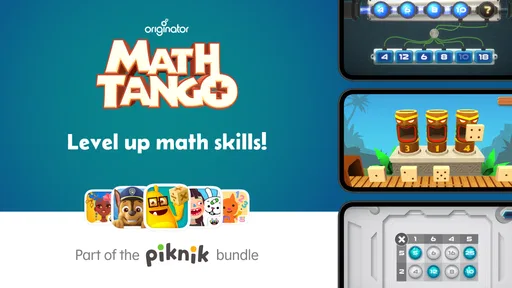
The first thing that struck me about MathTango: Math Games for Kids was its vibrant and engaging interface. Right from the get-go, kids are thrown into an imaginative world filled with quirky characters and colorful landscapes. The design is intuitive, so even the youngest users can navigate without a hitch. It feels more like a fun game than an educational tool, which is exactly what you want when trying to sneak some learning into playtime.
Learning Through Play
One of the standout features of MathTango is its clever integration of math challenges into the story. Kids embark on a journey through different islands, each filled with unique math problems tailored to various skill levels. From addition and subtraction to more complex concepts like multiplication and division, the app covers a wide range of topics. The best part? Kids don't even realize they're learning because they're too busy having fun.
The app uses a reward system that keeps kids motivated. Completing challenges earns them stars, which they can use to unlock new characters and customization options. This element of gamification is a brilliant way to keep kids engaged and coming back for more.
Keeping rewards in perspective
For a child who needs encouragement to begin a short practice session, stars and unlockable choices can make progress feel visible. I would use those rewards as a prompt to talk about effort—“you stuck with that tricky set”—rather than as the main measure of success. A child may be more interested in collecting items than noticing the arithmetic, so a quick follow-up question such as “what kind of problem did you solve?” helps connect the game’s reward loop to learning.
There is also a useful trade-off here: game rewards can make repetition less tedious, but they do not guarantee that a skill has become secure. If a child can finish challenges quickly yet struggles with similar sums away from the screen, bring a few of those sums into everyday conversation or onto paper. That small check helps you see whether the game is supporting recall or mainly keeping play moving.
Tailored to Different Ages
MathTango isn't a one-size-fits-all kind of app. It's designed to grow with your child, offering challenges that are appropriate for different age groups. Whether you have a preschooler just starting out with basic counting or an older child ready to tackle more advanced math, this app has something for everyone. The adaptive nature of the game ensures that kids are always challenged, but never overwhelmed.
Choosing it for the right learner
The broad kindergarten-to-grade-five range makes the game relevant to families with children at different stages, but I would still watch the child’s actual response rather than relying on an age label. A younger learner may need an adult nearby to help interpret a prompt or stay focused, while an older child who already enjoys arithmetic puzzles may be happy to explore independently. If a child finds animated settings distracting, or would rather see a plain question and answer it directly, a quieter worksheet-style resource may be a better fit.
It is also worth distinguishing practice from instruction. A child who is meeting a new idea for the first time may benefit more from an adult explaining it with objects, drawings, or examples from school before opening the game. MathTango is strongest as a way to make familiar number work feel more approachable; I would not make it the only route for a learner who needs careful step-by-step teaching.
Parental Controls and Progress Tracking
As a parent or guardian, you'll appreciate the app's robust parental controls and progress tracking features. You can easily monitor your child's progress, seeing which areas they're excelling in and where they might need a little extra help. The app provides detailed reports, so you're never in the dark about your child's development. Plus, you can set limits on screen time, ensuring that learning doesn't turn into a marathon gaming session.
A routine that stays manageable
For everyday use, I would keep the game in a short, predictable slot rather than letting it become an open-ended reward. For example, after school a child could play a little while a caregiver prepares dinner, then explain one problem they remember before moving on. That gives the adult a chance to notice whether the activity felt easy, confusing, or enjoyable without turning family time into a test. If the child is tired or frustrated, stopping is more useful than insisting on finishing a stretch of play.
Progress information is most helpful when it leads to a small next step. If a child seems comfortable with one kind of arithmetic but hesitates with another, you can use that observation to guide a conversation with them or their teacher. I would not treat an in-game report as a full picture of school performance: it reflects activity in the game, while classroom work also involves explaining methods, reading word problems, and solving questions in different formats.
Engagement Beyond the Screen
What really sets MathTango apart is its ability to spark an interest in math beyond the app itself. My cousin started asking questions about numbers and patterns in everyday life, all thanks to the curiosity ignited by the app. It's a fantastic starting point for discussions and further exploration of math in the real world.
The app also encourages social interaction, as kids can share their progress and achievements with friends. This adds a layer of community, making learning a shared experience rather than a solitary one.
How it compares with other ways to practise
Compared with paper worksheets, MathTango has the advantage of turning a set of sums into a more playful activity, which may help a reluctant learner get started. Worksheets, on the other hand, are easier for an adult to inspect at a glance and can be better when the goal is to practise writing out a method. A general puzzle game may be more open-ended and less focused on arithmetic, while a conventional maths drill can offer a more direct, less story-driven route to repeated questions. The right choice depends on whether a child needs motivation, clear written practice, or a change of pace.
I would use MathTango as one part of a small mix: let the game make practice inviting, then occasionally ask the child to explain an answer or try a related sum without the screen. That is a practical way to avoid confusing game fluency with broader understanding. If your priority is a quiet, distraction-free environment or a resource built around a specific school curriculum, compare alternatives before settling on this one.
Who should give it a try—and who may not need it
I can see it working especially well for a primary-school child who enjoys colourful settings and benefits from a reason to return to basic number practice. It may also suit a caregiver looking for a ready-made activity during a short break in the day, provided an adult can set sensible boundaries around purchases and play time. Since the game is rated for Everyone, it is presented for a broad audience, but children still differ in reading confidence, patience, and comfort using a mobile device.
I would skip it, or at least try another approach first, if a child strongly prefers paper, is easily pulled off task by animated game presentation, or needs a structured explanation of a particular maths concept. It may also be the wrong option for a family that wants a completely purchase-free experience: the free download comes with paid items, so an adult should decide in advance whether purchases are allowed. These are not reasons the game is poor; they are reasons to match it to the learner and household.
What I would check as a returning player
For families who already have it installed, I would focus on whether the current experience still fits the child’s routine rather than expecting a version number to signal a major change. Confirm that the device meets the Android requirement if installing or troubleshooting, and check that the child is using the intended profile and level of challenge. If a learner seems bored, the issue may be that the activity is too easy or that the reward loop has become the main attraction; if they seem stuck, sit alongside them and see whether the instructions or the maths itself is causing the difficulty.
As the game continues to be used, the things worth watching are practical: whether the child remains interested, whether they can apply a skill outside the game, and whether the purchase setup stays comfortable for the family. Those observations are more useful than guessing what a future update might contain. I would welcome clearer evidence of how progress maps to a child’s needs, but in the meantime, a parent’s occasional check-in is a sensible companion to the game.
Wrapping It Up
In a world where screens often get a bad rap, MathTango: Math Games for Kids is a refreshing reminder that technology can be a powerful tool for learning. By turning math into a playful adventure, this app manages to make a traditionally challenging subject both accessible and enjoyable. Whether you're a parent looking to supplement your child's education or a teacher seeking engaging classroom tools, MathTango is worth a try.
So, if you're ready to watch your child embark on a mathematical journey filled with fun and discovery, give MathTango a download. Who knows? You might just find yourself sneaking in a few math games too!
My recommendation in practice
I would start by letting the child try a short session while an adult is available, then ask what felt fun and what felt difficult. That simple check reveals more than a quick glance at the screen: it shows whether the game is helping the child engage with maths or whether its presentation is getting in the way. Keep purchases under adult control, pair play with occasional off-screen examples, and use the game as an invitation to practise rather than a verdict on ability.
Overall, MathTango is best understood as an accessible, story-shaped way to make arithmetic practice feel less like a chore. Its strongest case is a child who enjoys game worlds and needs encouragement to spend time with maths; its weaker case is a learner who needs direct teaching, written working, or a deliberately low-stimulation format. If that distinction matches your household, I think it is worth trying, with realistic expectations and a little adult involvement.
Verdict
Strengths of MathTango: Math Games for Kids
- Engaging math puzzles for young learners.
- Bright, colorful graphics enhance experience.
- Adaptive difficulty suits various skill levels.
- Encourages critical thinking and problem-solving.
- Frequent updates with new challenges.
Limitations of MathTango: Math Games for Kids
- Requires internet connection for some features.
- In-app purchases can add up quickly.
- Limited language options available.
- May not cover advanced math topics.
- Some ads disrupt gameplay experience.
Other Releases by Play Piknik
View All
Toca Boca Jr: Fun Kids Games
Educational3.3

Toca Boca Hair Salon 4
Educational3.8

PAW Patrol Academy
Education3.5

Gabbys Dollhouse: Cat Games
Educational3.8
Similar Picks in This Category
View All
Little Panda Policeman
BabyBus4.0

Monster Trucks Game for Kids 2
Raz Games4.1

Little Panda's Chinese Recipes
BabyBus4.4

Little Panda's Restaurant
BabyBus4.4

Little Panda's Ice Cream Games
BabyBus4.3

Baby Panda Care
BabyBus3.8
Frequently Asked Questions
What age group is MathTango suitable for?
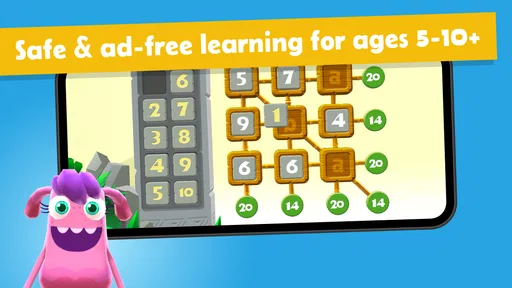
MathTango is designed specifically for children aged 5 to 10 years old. It combines fun math challenges with engaging gameplay to help young learners strengthen their math skills. The app is structured to adapt to different learning levels, ensuring that kids can progress at their own pace.
Does MathTango require an internet connection to play?
MathTango primarily works offline, allowing children to play and learn without needing a constant internet connection. However, some features, such as updates or additional content downloads, might require internet access. This makes it convenient for use during travel or in places with limited connectivity.
Are there any in-app purchases in MathTango?
Yes, MathTango offers in-app purchases. While the app provides a substantial amount of free content, additional features and levels may be unlocked through purchases. Parents should be aware and monitor these transactions to manage costs and ensure a safe experience for their children.
How does MathTango help improve math skills?
MathTango integrates math exercises with interactive games to make learning enjoyable. It covers basic arithmetic, problem-solving, and critical thinking skills, guiding children through a series of engaging challenges. The app’s adaptive learning system ensures that the difficulty aligns with the child’s progress, fostering continuous improvement.
Is MathTango safe for children to use?
MathTango is designed with child safety in mind. It does not contain inappropriate content, and parental controls are available to manage usage and in-app purchases. The app is also compliant with child privacy laws, ensuring a secure and educational environment for young users.
Play our best games!


